Qualify the process
Set project acceptance targets, document measured formula inputs, and trial selected cementitious materials before production.
Technology Transfer & Production Systems
Foaming agents & SIP formwork systems
An integrated transfer of formulation, equipment, and construction know-how for lightweight cellular concrete and monolithic building systems.
Every engagement starts with four questions: what the concrete will be used for, the output you need, which cement and sand are available locally, and what the project has to satisfy. Foaming-agent dilution and cement-to-sand ratios are never fixed in advance. Each recipe is measured and qualified through trial mixes, and generator capacity, pressure and flow are confirmed against equipment data and commissioning measurements.
Production then runs as one continuous workflow, from foam generation through mixing, transfer, placement and inspection. Foam density, fresh concrete density, workability and material consumption are logged on a repeatable sampling plan, and curing, demoulding and loading follow approved project criteria. SIP formwork stays in place as permanent formwork and is not dismantled: walls are cast monolithically around door and window frames and embedded services. Any contribution to insulation or cladding is designed and verified for the specific assembly.
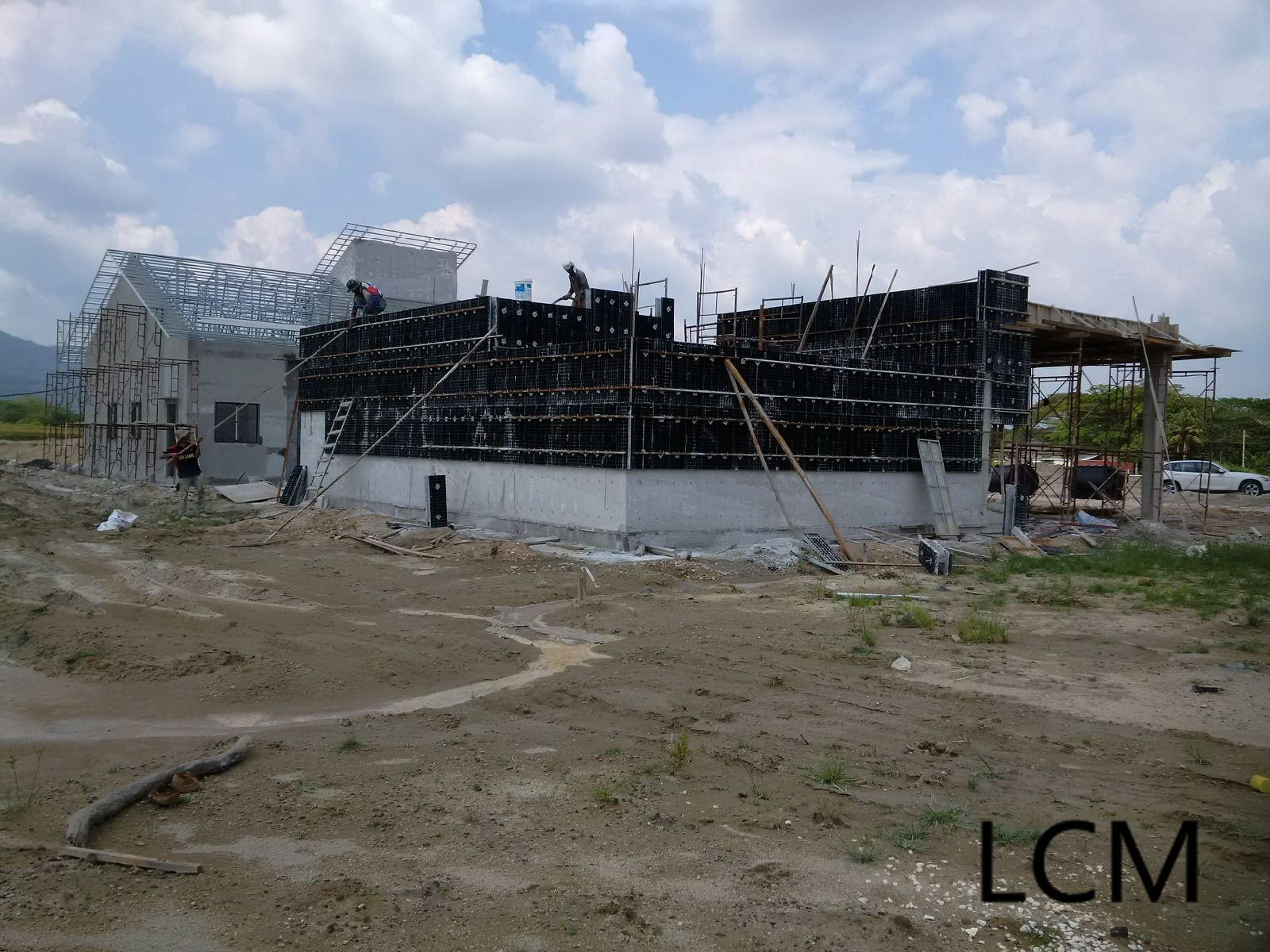
SIP formwork · monolithic wall construction
Panel geometry, lifting points, reinforcement, connections, and pour sequence are confirmed against the approved structural design before placement.
Access to highly stable, optimized foaming agent formulas designed for maximum yield.
Installation and calibration of industrial-grade foam generators and mixing plants.
On-site process support and training for density control and curing times.
A Malaysian Technology
Door and window frames, electrical conduits, water pipes and their sockets are set in position before the cellular concrete is placed. LCM provides the training and the know-how to cast a SIP house as a single monolithic structure.
The system is built on a pad strip raft foundation, with full monolithic walls cast in stay-in-place formwork. Five-hour fire ratings have been tested by SIRIM and BOMBA Malaysia, and the method is delivered as an industrialized construction system.
Stay-In-Place Formwork →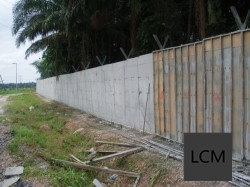
SIP formwork and embedded service routes must be coordinated with drawings before placement. Confirm support, reinforcement, pour sequence, and structural details with the project engineer.
IBS · Industrialized Construction System
LCM reports that the system remains viable for high-rise walls: faster cycles, 30-40% lower cost and better finished walls. Confirm cost, fire performance, structural design and approvals against your own project.
Explore reported benefits →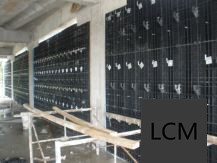
Wall-panel geometry, lifting points, reinforcement, connections, and curing criteria are project-specific. Validate handling and installation requirements against approved structural design.
Foaming Equipment
A foaming system brings together a prepared solution, controlled water supply, compressed air, foam generation, and the downstream mixing sequence. Whether a plant is arranged for continuous operation or discrete batches depends on the generator design, required output, available utilities, and the process that is commissioned.
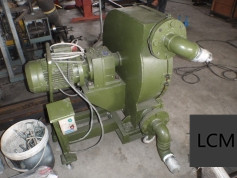
The operator interface shows metering points and adjustment valves for the approved foaming solution. Setpoints and observed foam properties are calibrated at commissioning and re-checked before each production run.
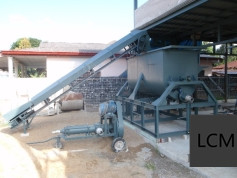
The utility layout identifies water-pump connections, compressed-air supply, isolation points and service access. Flow, pressure, filtration and electrical ratings are confirmed for the selected machine rather than assumed from a generic layout.
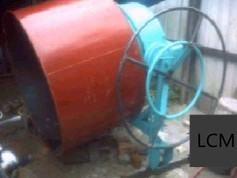
Equipment placement, hose routing, operator access and the connection to mixing or casting operations are documented for each site. Heavy-duty suitability depends on the frame, components, maintenance plan and environmental protection specified for the unit.
In continuous production, an appropriately engineered system can feed foam at a controlled rate into a compatible mixing line. Batch operation instead allows a defined quantity of foam or mix to be produced and checked between cycles; the selected arrangement should match the target volume, site logistics, and quality-control procedure.
Documentation
Request LCM materials directly. Brochure files, technical charts, and video links are not included in this local backup.
Technical Process
Every project is scoped around the same inputs: intended use, target output, local material sources, available utilities and acceptance criteria. Formulation, foam generation, mixing, transfer, placement and inspection are planned as one workflow, not as separate operations.
No dilution ratio or cement-to-sand ratio can be fixed in advance. The recipe is established from product data, the mix design and the materials on site, then qualified through trial mixes before production release. A generator delivers steady foam only inside its verified operating envelope, with output matched to mixing and placement; capacity, pressure and flow are confirmed with equipment data and commissioning measurements. Pump and hose performance follow the mix, the route, the lift and the rate of placement.
Foam density, fresh concrete density, workability, material consumption and interruptions are recorded on a repeatable sampling plan. Placed material is protected, and curing, demoulding, loading and follow-on trades follow approved project criteria and strength evidence; curing time varies with formulation, geometry, temperature and humidity. In SIP assemblies the formwork is never removed, so the wall arrives already formed and insulated, with any insulation or cladding contribution designed and verified for that assembly.
Qualify the process
Set project acceptance targets, document measured formula inputs, and trial selected cementitious materials before production.
Balance foam output
Match verified generator delivery to mixer demand and placement rate; check air, water, and pressure against machine documentation.
Commission with evidence
Record density, consumption, interruptions, curing conditions, and test results to build repeatable operating procedures.
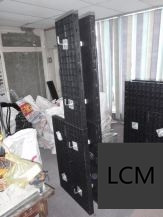
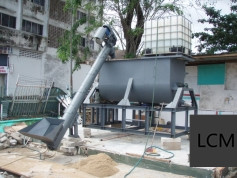
Watch the process