Foam Generation
Define foaming-agent preparation and generator operation for the target process and locally available inputs.
Foam-Casting Applications
Apply licensed foaming-agent chemistry and generator technology to controlled lightweight cellular concrete production.
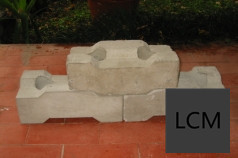
Define foaming-agent preparation and generator operation for the target process and locally available inputs.
Document mixing, placement, and curing steps so teams can evaluate consistency during production trials.
Build a project scope covering licensing, equipment manufacturing, operator training, and application support.
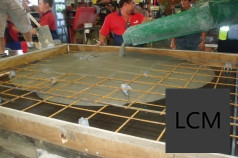
Sample testing helps relate mix proportions and foam quality to fresh and hardened properties. Select test methods, specimen conditioning, and acceptance criteria for the intended application and applicable standards.
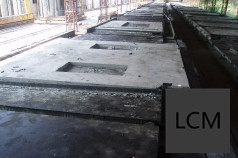
Mixing energy and timing influence the retention of the foam structure, so establish them by controlled production trials. Protect placed material and document curing conditions for a valid performance assessment.
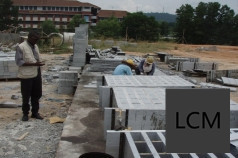
Technical Process
Every project is scoped around the same inputs: intended use, target output, local material sources, available utilities and acceptance criteria. Formulation, foam generation, mixing, transfer, placement and inspection are planned as one workflow, not as separate operations.
No dilution ratio or cement-to-sand ratio can be fixed in advance. The recipe is established from product data, the mix design and the materials on site, then qualified through trial mixes before production release. A generator delivers steady foam only inside its verified operating envelope, with output matched to mixing and placement; capacity, pressure and flow are confirmed with equipment data and commissioning measurements. Pump and hose performance follow the mix, the route, the lift and the rate of placement.
Foam density, fresh concrete density, workability, material consumption and interruptions are recorded on a repeatable sampling plan. Placed material is protected, and curing, demoulding, loading and follow-on trades follow approved project criteria and strength evidence; curing time varies with formulation, geometry, temperature and humidity. In SIP assemblies the formwork is never removed, so the wall arrives already formed and insulated, with any insulation or cladding contribution designed and verified for that assembly.
Prepare moulds
Inspect dimensions, cleanliness, release procedure, closure, and support before each production cycle.
Control each batch
Record measured materials, foam properties, fresh density, filling consistency, and interrupted flow.
Release to verified criteria
Use mix-specific strength and curing evidence to determine demoulding, handling, storage, and dispatch.
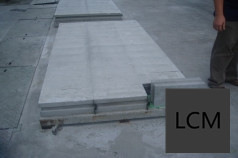
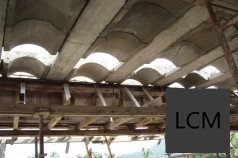
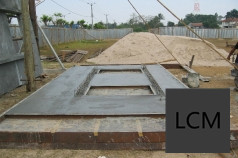
Product footage
Watch lightweight cellular concrete batched, poured into moulds and demoulded as blocks and moulded components, then released against mix-specific strength evidence.